What is Thermage? Monopolar RF Technology Explained
Written by Delight Dermatology editorial team · Medically reviewed by Lead Dermatologist, Delight Dermatology Clinic (Korean Board-Certified Dermatologist, AAD International Fellow, ASLMS) · Last reviewed · Editorially updatedThermage FLX is a fourth-generation non-invasive skin-tightening device manufactured by Solta Medical (Bausch Health) that delivers monopolar capacitive radiofrequency to heat the dermis without a single fixed focal depth, inducing collagen remodeling. First FDA-cleared in 2002 for periorbital wrinkles, Thermage now treats face, neck and body areas. The FLX generation adds AccuREP impedance feedback and a vibrating handpiece designed to support comfort; individual discomfort and analgesia needs still vary.
| Specification | Detail |
|---|---|
| Device | Thermage FLX (4th generation) |
| Manufacturer | Solta Medical (Bausch Health) |
| Energy | Monopolar capacitive radiofrequency |
| Target layer | Dermal RF heating field; no single fixed focal depth |
| Control system | AccuREP pulse-by-pulse impedance feedback |
| Comfort feature | Vibrating handpiece |
| Epidermal protection | Cryogen spray cooling |
| FDA clearance | 2002 (periorbital wrinkles); later expanded to face, neck, body |
| Result onset | Gradual; timing varies across studies and patients |
| Result duration | Variable; no universal fixed duration is established |
| Tip families | Face tips, Eye Tip (periorbital), Body tip |
Thermage is a non-invasive skin-tightening treatment that uses monopolar capacitive radiofrequency (RF) to deliver controlled heat into the dermis. It is manufactured by Solta Medical, a Bausch Health company, and has been continuously developed since the original device received its first FDA clearance for periorbital wrinkles in 2002. The current generation is Thermage FLX, the fourth iteration of the platform.
How monopolar capacitive RF actually works
Radiofrequency energy at therapeutic settings warms tissue by oscillating polar molecules, primarily water, in a fast alternating electric field. In a monopolar configuration there is a single active electrode at the treatment tip and a separate return electrode elsewhere on the body; current passes through the tissue between them. The capacitive coupling in Thermage means the tip itself does not contact tissue with bare metal; energy is delivered through a dielectric layer, which produces a more uniform heating profile in the dermis than direct conductive contact. A cryogen spray cools the epidermis on each pulse so that the heat is concentrated in the deeper layer, not at the surface.
Where each device deposits energy
Cross-section of facial skin with depth scale in millimetres. Anatomy is illustrative.
The clinical target is the reticular dermis, a layer rich in fibroblasts and the collagen scaffolding that gives skin its firmness. Heating this layer to a controlled temperature range triggers two effects: an immediate contraction of existing collagen fibers and, over the following months, a slow remodeling response in which fibroblasts lay down new, organised collagen. The visible result, a firmer and slightly tighter surface, develops over three to six months instead of appearing on the day. The remodeling timeline and the collagen response have been characterized in the peer-reviewed literature on monopolar RF since the mid-2000s (Dover & Zelickson, 2007; Sukal & Geronemus, 2008; Lolis & Goldberg, 2012).
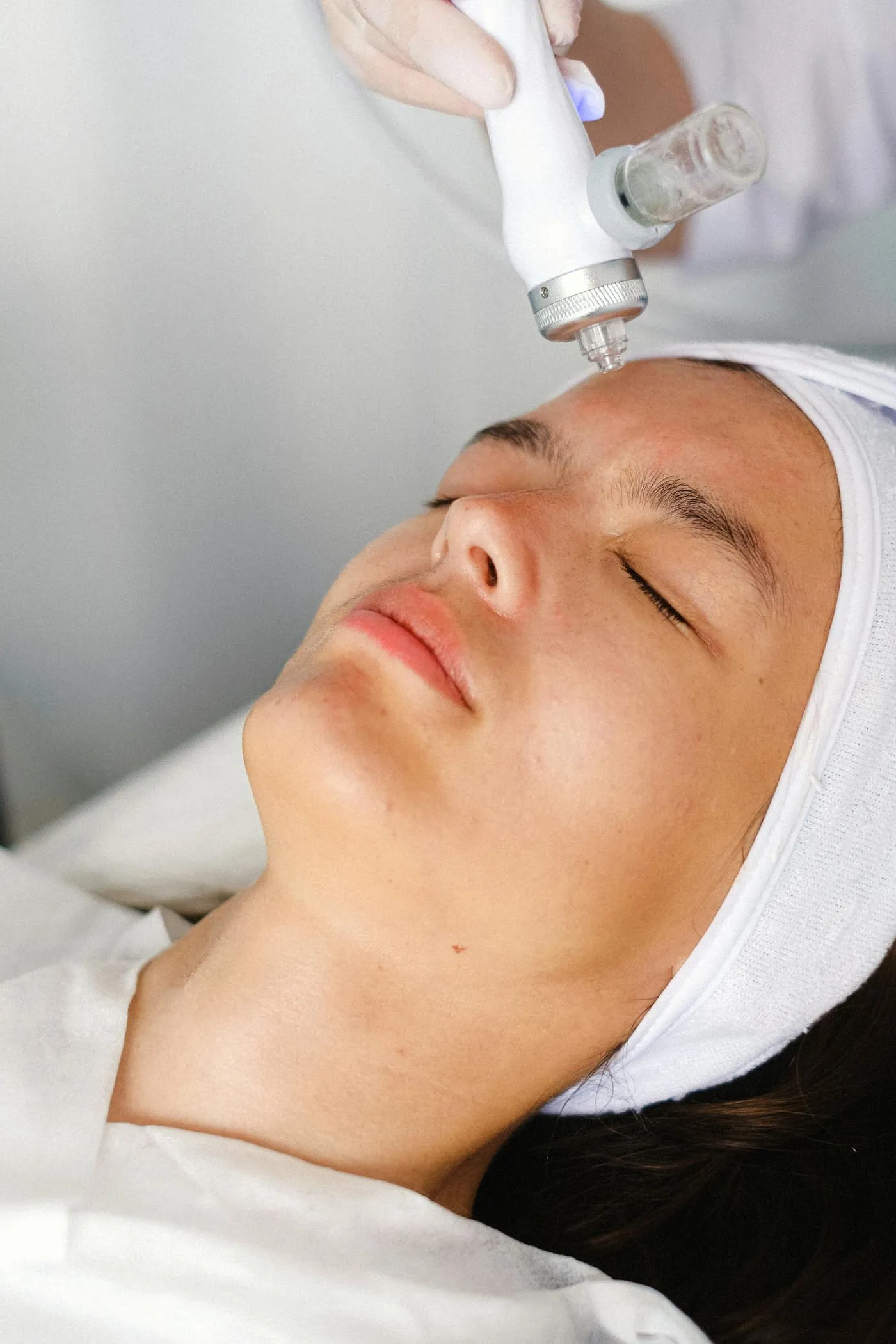
The Thermage FLX generation: what is new
Thermage FLX, released around 2017, introduced two practical changes over the previous Thermage CPT generation. The first is AccuREP, which measures tissue impedance and adjusts delivered RF energy on each pulse. This supports feedback-informed delivery but does not remove clinician judgment or all operator-dependent variability. The second is a vibrating handpiece designed to support comfort. Neither feature guarantees a low-pain session or determines whether analgesia is appropriate for an individual.
FDA clearance history
The first Thermage clearance, in 2002, was for the non-invasive treatment of periorbital wrinkles and rhytids, the area around the eyes, where the depth of the skin and the proximity of the orbital rim make laser-based wrinkle treatments more limited. Subsequent clearances expanded the indication to wrinkles and rhytids on the face generally, then to the temporary improvement of the appearance of cellulite, and to non-invasive treatment of skin on the body. The Thermage Eye Tip is specifically designed for the periorbital area, including treatment over closed eyelids when used by a clinician trained in the eye-tip protocol.
Tip families: face, eye, body
Thermage is delivered through interchangeable tips. The face tips are used on cheeks, jawline, lower face and neck. The Eye Tip, smaller and contoured for the orbital rim, is used for upper and lower eyelid skin and the periorbital area; this is what patients usually mean when they ask about "Eye Thermage". See Delight Dermatology's Eye Thermage procedure detail for the specific eye-area protocol. The body tip is larger, designed for higher pulse counts per session, and is used for the abdomen, inner arms, knees, thighs and similar areas where the treatment surface is broad. Tip choice is part of the consultation plan because it determines tissue depth, total pulse count and the cost band.
Before treatment, read how to verify a genuine Thermage tip in Korea.
If you are comparing newer monopolar RF platforms, the separate Thermage FLX vs XERF guide distinguishes their US technical records, indications, evidence limits and the current affected-unit XERF recall.
What Thermage does well, and what it does not
Thermage produces a measured improvement in dermal firmness and a modest tightening effect, consistent with the response documented in monopolar RF cohorts on Asian skin (Kushikata et al., 2005). It does not eliminate wrinkles in the way a filler does, and it does not lift sagging tissue in the way a thread or a surgical procedure does; those are different problems with different solutions. The result is not permanent, and published studies do not establish a fixed maintenance interval for every patient. Follow-up depends on the measured response, original laxity profile and factors such as photoageing exposure.
How it differs from Ultherapy
Patients often weigh Thermage against Ultherapy, the microfocused-ultrasound device. Their energy patterns differ, but the depth comparison is not simply dermis versus SMAS. Ultherapy Prime has 1.5, 3.0 and 4.5 mm transducers; its deepest setting can reach the SMAS and its shallower focal planes can overlap dermal RF treatment planes. The full comparison, including when combination may be considered, is on the Thermage vs Ultherapy page. To discuss which device makes sense for a specific laxity profile, see the Thermage information from Delight Dermatology.
Published references
The clinical statements on this page reflect the published literature on monopolar radiofrequency skin tightening. Citations below are primary or review sources; PubMed identifiers link to abstracts.
- Dover JS, Zelickson B; 14-Physician Multispecialty Consensus Panel. Results of a survey of 5,700 patient monopolar radiofrequency facial skin tightening treatments: assessment of a low-energy multiple-pass technique leading to a clinical end point algorithm. Dermatologic Surgery. 2007;33(8):900-907. PubMed
- Sukal SA, Geronemus RG. Thermage: the nonablative radiofrequency for rejuvenation. Clinics in Dermatology. 2008;26(6):602-607. PubMed
- Lolis MS, Goldberg DJ. Radiofrequency in cosmetic dermatology: a review. Dermatologic Surgery. 2012;38(11):1765-1776. PubMed
- Kushikata N, Negishi K, Tezuka Y, Takeuchi K, Wakamatsu S. Non-ablative skin tightening with radiofrequency in Asian skin. Lasers in Surgery and Medicine. 2005;36(2):92-97. PubMed