Thermage Candidates and Contraindications
Written by Delight Dermatology editorial team · Medically reviewed by Lead Dermatologist, Delight Dermatology Clinic (Korean Board-Certified Dermatologist, AAD International Fellow, ASLMS) · Last reviewed · Editorially updatedThermage is suited to adults with mild-to-moderate dermal laxity, including body-area laxity (abdomen, inner arms, knees, thighs) where lifting devices are less effective. It is contraindicated in patients with cardiac pacemakers or implantable cardioverter defibrillators (ICDs), permanent metal implants in the treatment area, pregnancy, active infection in the field, and after recent fillers or threads (waiting period applies). Patients with severe laxity should consider surgical lifting or Ultherapy.
| Candidacy factor | Suitability | Clinical notes |
|---|---|---|
| Mild–moderate dermal laxity | Possible candidate | Age is not the criterion. Suitability depends on examination, skin thickness, prior procedures and treatment goals. |
| Body-area laxity (abdomen, inner arms, knees, thighs) | Good candidate | Post-pregnancy or post-weight-loss laxity. Measurable firmness gain when the laxity is mild to moderate. |
| Prior Ultherapy, considering RF | Timing-dependent | Ultherapy uses 1.5, 3.0 and 4.5 mm focal depths, so treatment planes can overlap. The clinician should assess timing and whether another device adds value. |
| Severe laxity (heavy jowls, deep neck banding, mid-face descent) | Less suitable | Surgical territory. Ultherapy or surgical lifting is discussed in the consultation. |
| Recent fillers or threads in the area | Timing-dependent | Heat can accelerate filler breakdown or disturb the thread response. The waiting period is decided case by case. |
| Pacemaker or implantable cardioverter defibrillator (ICD) | Contraindicated | Monopolar RF current can interfere with implanted cardiac devices. |
| Permanent metal implants in the treatment area | Contraindicated (area-specific) | RF current can concentrate at the implant; excluded for that area. |
| Pregnancy | Contraindicated | No safety dataset in pregnant patients and no clinical indication requiring it. |
| Active infection or inflammation in the area | Contraindicated | Treatment is deferred until the area has settled. |
| Severe systemic illness or uncontrolled connective-tissue disorder | Case-by-case | Decided in consultation with the patient's primary care or specialty team. |
Thermage is broadly tolerated and is appropriate for most adults with mild to moderate skin laxity, but the device has specific contraindications that follow from its mechanism: monopolar radiofrequency delivers electrical energy through tissue, which is not compatible with certain implants. Candidacy is decided in consultation, but the points below are the ones that come up consistently.
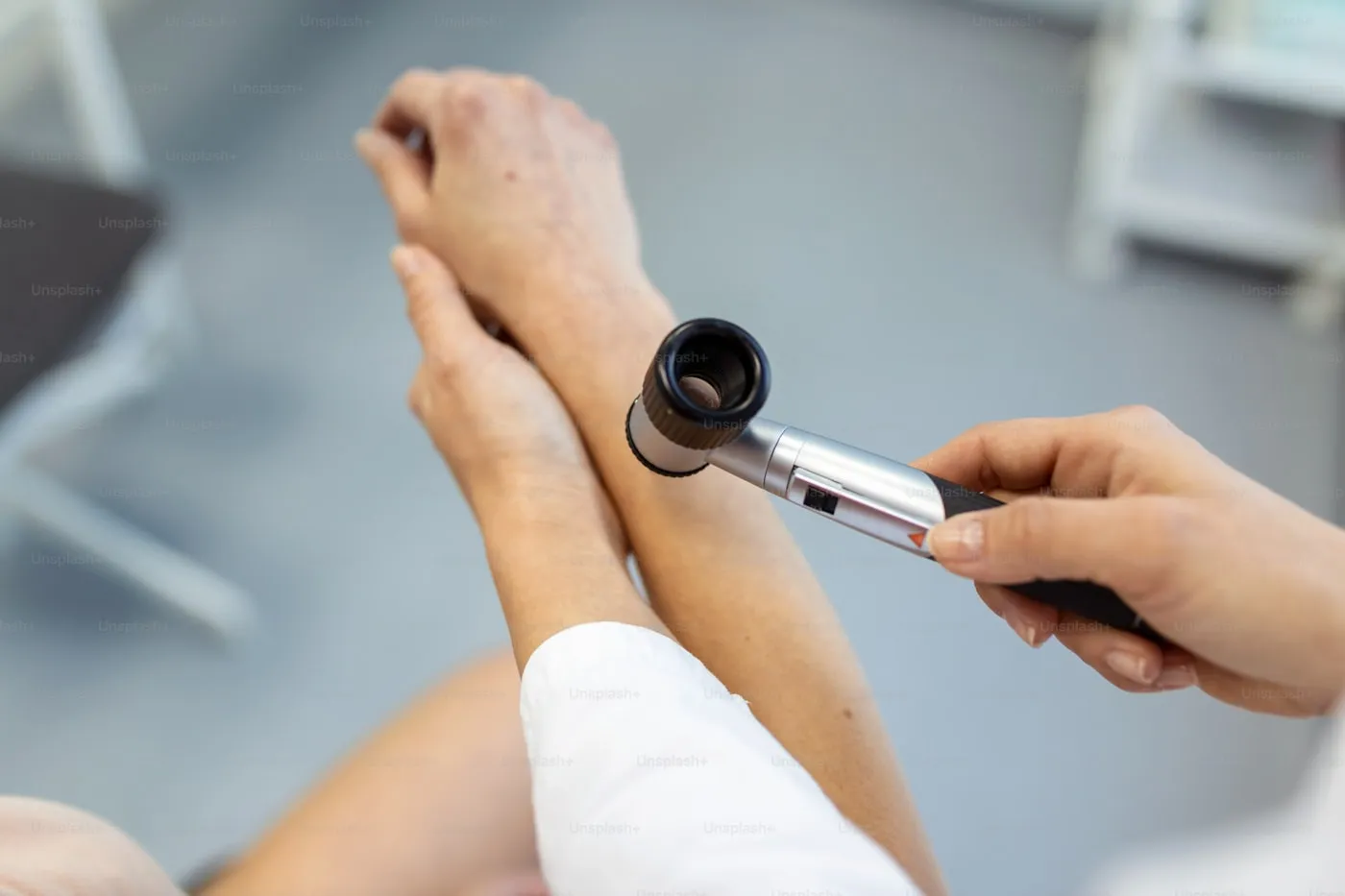
Good candidates
The patient most likely to be satisfied with a single Thermage session has mild or moderate laxity that examination finds suitable for dermal RF treatment. Age is not the criterion. Skin thickness, laxity location and degree, prior procedures, tissue volume and goals all affect candidacy.
Body-area patients are a distinct candidate group. Thermage body tips are used on the abdomen (post-pregnancy or post-weight-loss laxity), inner arms, knees and inner thighs. Patients who have ruled out body-contouring surgery and who want a non-invasive option are typical candidates here. Body Thermage does not produce surgical results, but it produces a measurable improvement in firmness when the underlying laxity is mild to moderate.
Prior Ultherapy does not automatically make someone a Thermage candidate. Ultherapy uses 1.5, 3.0 and 4.5 mm focal planes, so its treatment planes can overlap dermal RF treatment. Timing and whether another device adds value are assessed individually.
Less suitable candidates
A patient with severe laxity (heavy jowls, deep neck banding, substantial mid-face descent) will not be satisfied with Thermage alone. The amount of tissue movement they want is in surgical territory, not non-invasive. A discussion of the realistic result range, and of whether Ultherapy might be more appropriate as the non-surgical option, is part of the consultation, not a push to book the device the patient asked about.
Patients who have had recent filler or thread procedures in the treatment area benefit from a waiting period before Thermage. Heat applied over a hyaluronic acid filler can accelerate breakdown of the filler product, and energy delivered over absorbable threads can interfere with the thread response. Timing varies by the specific filler or thread used, and is decided case-by-case.
Contraindications
The contraindications below are categorical, not case-by-case. The first three matter specifically because Thermage delivers monopolar radiofrequency. The published safety record on eyelid and periorbital treatment (Biesman et al., 2006) and on body-area RF (Anolik et al., 2009) is good when contraindications are respected and the protocol is delivered as designed.
- Pacemaker or implantable cardioverter defibrillator (ICD). Monopolar RF current can interfere with implanted cardiac devices. Thermage is not used in patients with these implants.
- Metal implants in the treatment area. Permanent metal implants in the field of treatment can concentrate RF current. Dental implants are not normally in the treatment field for face Thermage; orthopaedic implants in body areas to be treated are a contraindication for that area.
- Pregnancy. Thermage is not performed during pregnancy. There is no safety dataset for the procedure in pregnant patients and there is no clinical indication that would require it.
- Active infection or inflammation in the treatment area. Treatment is deferred until the area is settled.
- Recent fillers or threads in the treatment area. Waiting periods apply; this is a timing consideration rather than a permanent exclusion.
- Severe systemic illness or uncontrolled connective tissue disorder. Treatment decisions are made in consultation with the patient's primary care or speciality team.
Timing questions (Thermage after Botox, over existing fillers, or around a pregnancy) have their own sourced walkthrough in Thermage timing questions.
What the consultation actually covers
International patients may begin with a general enquiry without a photo. An optional photo-based preliminary review is available over WhatsApp, Line or KakaoTalk; the in-person examination confirms the plan. The clinician assesses laxity, identifies the tip type (face, eye, body) most appropriate to the area, and estimates the total pulse count, which in turn drives the price. If Thermage is the wrong device for the patient's actual concern, that is said directly rather than worked around. The consultation also covers contraindications by history: pacemaker and ICD status, implanted metal in the treatment area, pregnancy status, and recent filler or thread history.
For broader dermatology questions outside the Thermage envelope (pigmentation, acne, deep wrinkle treatment, body contouring outside the Thermage indication), please see Delight Dermatology's Thermage consultation page.
Read more about who is and is not a candidate for Ultherapy; suitability is based on anatomy and goals, not a simple layer or age rule.
Published references
The clinical statements on this page reflect the published literature on monopolar radiofrequency skin tightening. Citations below are primary or review sources; PubMed identifiers link to abstracts.
- Biesman BS, Baker SS, Carruthers J, Silva HL, Holloman EL. Monopolar radiofrequency treatment of human eyelids: a prospective, multicenter, efficacy trial. Lasers in Surgery and Medicine. 2006;38(10):890-898. PubMed
- Anolik R, Chapas AM, Brightman LA, Geronemus RG. Radiofrequency devices for body shaping: a review and study of 12 patients. Seminars in Cutaneous Medicine and Surgery. 2009;28(4):236-243. PubMed
- Lolis MS, Goldberg DJ. Radiofrequency in cosmetic dermatology: a review. Dermatologic Surgery. 2012;38(11):1765-1776. PubMed