Eye Thermage in Seoul: The Periorbital Thermage FLX Eye Tip
Written by Delight Dermatology editorial team · Medically reviewed by Lead Dermatologist, Delight Dermatology Clinic (Korean Board-Certified Dermatologist, AAD International Fellow, ASLMS) · Last reviewed · Editorially updatedEye Thermage uses the Thermage FLX Eye Tip (a smaller, contoured tip) to deliver monopolar radiofrequency to the delicate skin around the eyes. It targets the same dermal layer as face Thermage but with a protocol calibrated to the periorbital area, including treatment over closed eyelids by a clinician trained in the eye-tip protocol. Periorbital wrinkles were the original 2002 FDA-cleared Thermage indication, and a prospective study evaluated eyelid treatment (Biesman et al., 2006). The clinic-confirmed estimate for an Eye Tip session is 25–35 minutes; actual time varies with the treatment map, and it may be planned separately or with a face session.
What "Eye Thermage" actually means
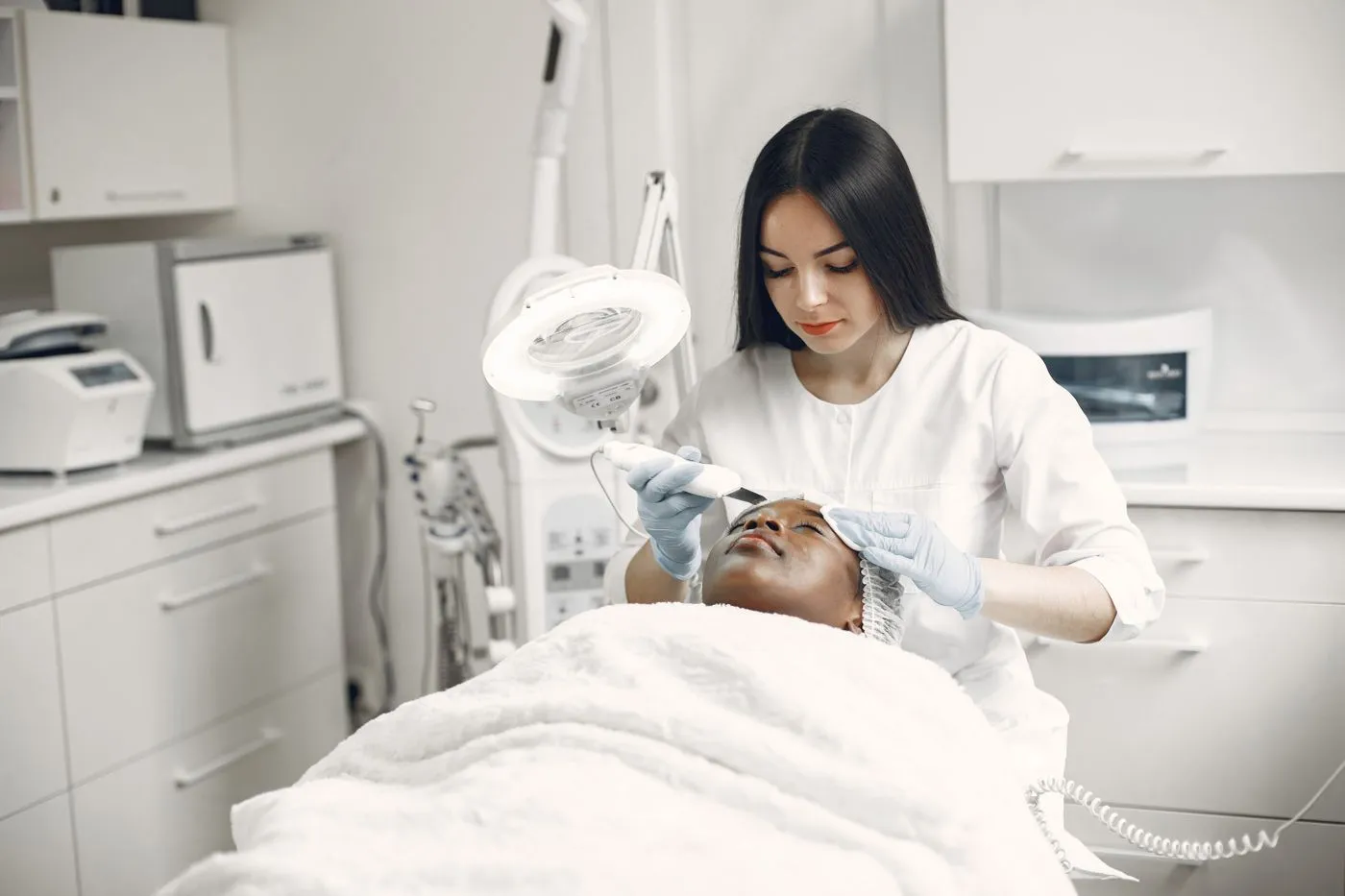
Eye Thermage is not a separate device. It is the Thermage Eye Tip used in the periorbital area: the smaller, contoured tip designed for the upper and lower eyelid skin and the area around the orbital rim. When patients ask about "Eye Thermage," this is the treatment they mean. It runs on the same Thermage FLX platform, uses the same monopolar capacitive radiofrequency, and targets the same dermal layer as face Thermage; only the tip and the protocol change. The mechanism is covered in full on the What is Thermage page.
Why the eye area needs its own tip and protocol
The skin around the eyes is thinner than facial skin and sits close to the orbital rim, which is exactly why laser-based wrinkle treatments are more limited in this area. The Eye Tip is contoured for that anatomy and allows treatment over closed eyelids when it is delivered by a Korean Board-Certified Dermatologist trained in the eye-tip protocol (see the clinician's credentials). The depth of energy and the pulse count are calibrated to the delicate periorbital skin rather than to the broader face. The published safety record for monopolar radiofrequency on human eyelids comes from a multicenter prospective trial (Biesman et al., 2006).
The 2002 FDA periorbital origin
The periorbital Thermage indication traces directly to the platform's original device clearance. The first Thermage FDA clearance, in 2002, was for the non-invasive treatment of periorbital wrinkles (the area around the eyes) before later clearances expanded the indication to the face generally, then to the neck and body. In that sense the periorbital area is where Thermage began, and the Eye Tip is the part of the platform most directly tied to that first clearance.
What Eye Thermage treats, and what to expect
Like face Thermage, the Eye Tip heats the reticular dermis to trigger an immediate contraction of existing collagen and a slower remodeling response, producing firmer, slightly tighter skin around the eyes. Published studies describe gradual change rather than an immediate final result (Sukal & Geronemus, 2008), but timing and degree vary. It is a firmness-and-texture treatment, not a way to erase deep lines or lift heavy upper-eyelid hooding, and any maintenance plan is individualized. Temporary warmth, redness, swelling, or tenderness can occur; recovery varies, as described on the aftercare and downtime page.
Session length and pricing in Seoul
An Eye Tip session in Seoul is short, usually twenty-five to thirty-five minutes, because the treated area is small. On its own it falls in a broad range of roughly KRW 400,000 to 900,000 as a Seoul market reference, not a Delight clinic quote. It may be planned alone or as an add-on to a face Thermage session. Where a session lands in that range depends on the pulse count and on whether it is combined with face or body areas. The full set of price variables is explained on the Seoul pricing page.
Combining Eye Thermage with face Thermage or Ultherapy
Eye Tip may be planned alone or with a face treatment after examination. Ultherapy Prime also has 1.5, 3.0 and 4.5 mm focal settings, so treatment planes around the eye can overlap rather than remaining in completely separate layers. A combined plan is not automatic and must avoid duplicating treatment; the depth comparison is set out on the Thermage vs Ultherapy page. For the periorbital protocol specifically, see Delight Dermatology's Eye Thermage procedure detail.
Who should not have Eye Thermage
The contraindications are the same as for Thermage generally, because the energy source is the same monopolar radiofrequency. Eye Thermage is not performed in patients with a pacemaker or implantable cardioverter defibrillator, where permanent metal implants sit in the treatment field, during pregnancy, over active infection or inflammation in the area, or soon after fillers or threads in the periorbital region (a waiting period applies). The candidates and contraindications page covers this in full.
Published references
The clinical statements on this page reflect the published literature on monopolar radiofrequency skin tightening. Citations below are primary or review sources; PubMed identifiers link to abstracts.
- Biesman BS, Baker SS, Carruthers J, Silva HL, Holloman EL. Monopolar radiofrequency treatment of human eyelids: a prospective, multicenter, efficacy trial. Lasers in Surgery and Medicine. 2006;38(10):890-898. PubMed
- Dover JS, Zelickson B; 14-Physician Multispecialty Consensus Panel. Results of a survey of 5,700 patient monopolar radiofrequency facial skin tightening treatments. Dermatologic Surgery. 2007;33(8):900-907. PubMed
- Sukal SA, Geronemus RG. Thermage: the nonablative radiofrequency for rejuvenation. Clinics in Dermatology. 2008;26(6):602-607. PubMed